
Drums, Dance, and Devotion — Harvest Festivals of Meghalaya
By Shree Sauparnika V
In the mist-covered hills of Meghalaya, two vibrant festivals bring communities together in joyful thanksgiving during the first few weeks of November — Wangala of the Garo people and Nongkrem of the Khasi tribe. Both celebrations honour the harvest, the land, and the spirits of nature — yet each has its own distinctive rituals, music, and meaning.
Wangala – The Hundred Drums of the Garos
Wangala is the major post-harvest festival of the Garo tribe, also known as the ‘Hundred Drums’ festival. It is dedicated to the sun-god Misi Saljong (also called Pattigipa Ra’rongipa), who is believed to bless a rich harvest. Typically celebrated between September and December, the festival marks the end of the agricultural year and the onset of winter.
The celebration begins with the ritual Rugala, performed inside the village chief’s house, where offerings such as cooked rice, vegetables, and rice beer are made. On the following day, known as Kakkat, the public festivities begin with energetic drumming and dance. Men beat long, oval-shaped drums, women form parallel lines in colourful traditional attire, and flute-like instruments play alongside gongs and horns.
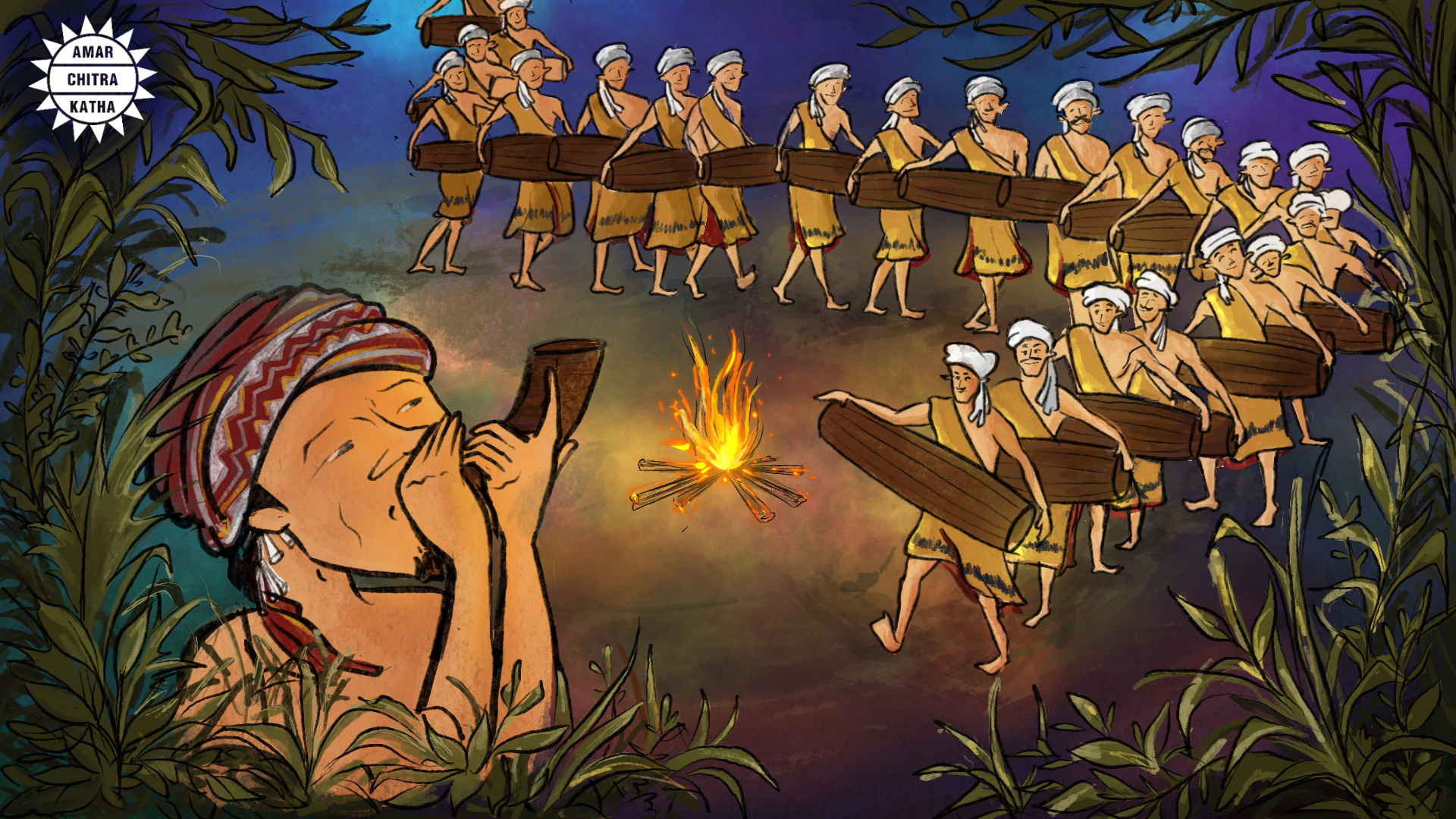
One of the most striking features of Wangala is how young and old come together in celebration — children, adults, and elders all join in the drumming, dancing, and community rituals. Through rhythm and movement, the Garos express gratitude, community identity, and the unity of nature and human labour.
Nongkrem – A Sacred Dance of Thanksgiving
Nongkrem (often written as Pomblang Nongkrem) is one of the most important festivals of the Khasi tribe. It is held at Smit, the cultural centre of the Khyrim Hima (indigenous kingdom) near Shillong, in November.
The festival spans several days and involves sacred ceremonies led by the Syiem (traditional Khasi chief) and the high priestess. The key ritual is the Pomblang sacrifice (usually of a goat) offered to the deity Lei Shyllong — the guardian spirit of Shillong Peak — and to the ancestors of the ruling clan.
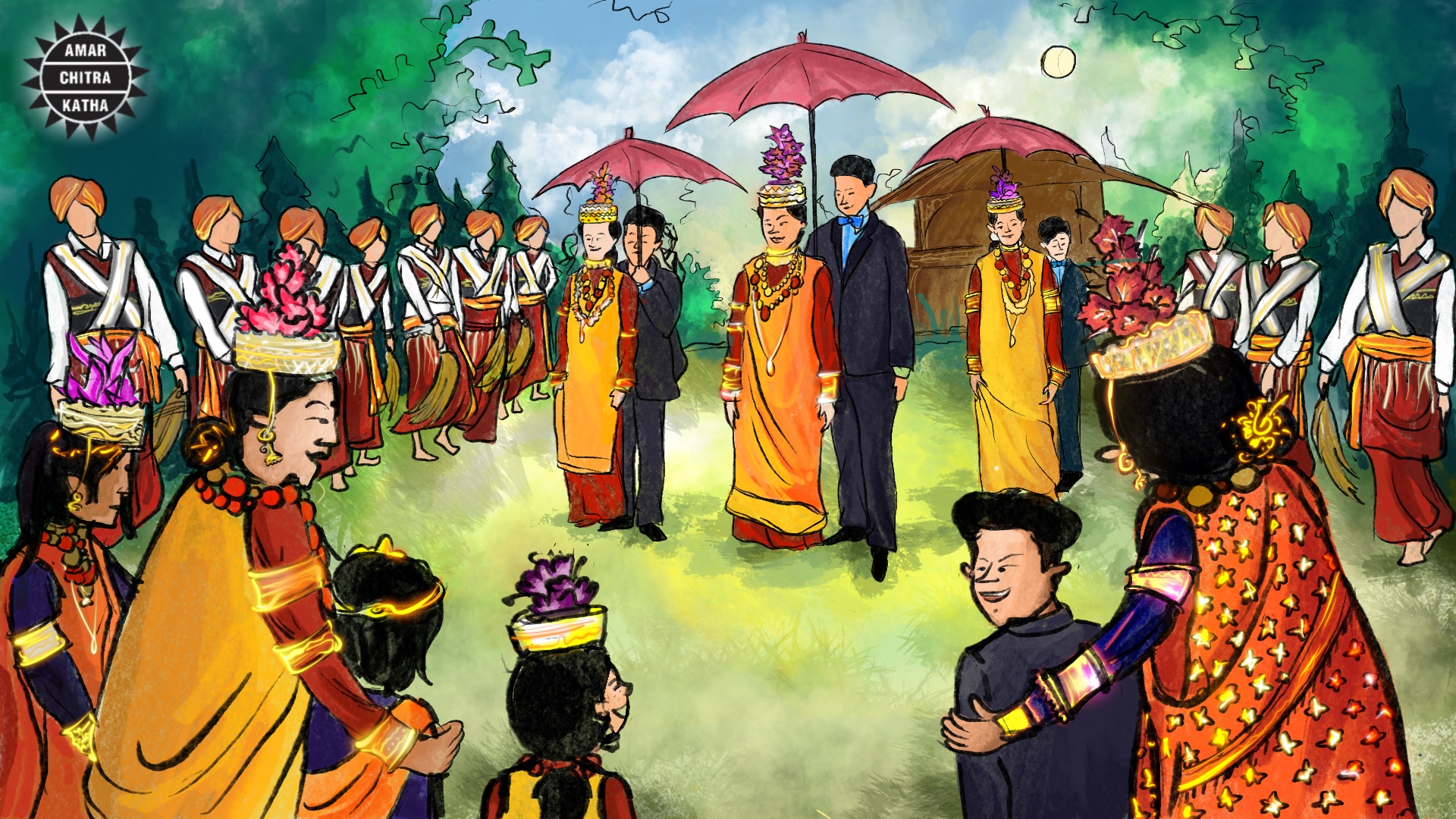
Once the rituals conclude, the rhythmic Nongkrem dance begins. Young Khasi women dressed in brilliant silk and wearing gold ornaments move gracefully to the beat of drums, while men holding swords and yak-hair whisks step up the rhythm with vigorous steps. The music of the tangmuri (a traditional pipe instrument) fills the air as the community expresses joy, unity, and gratitude.
Nongkrem, thus blends devotion, heritage, and celebration — reinforcing the cultural identity of the Khasi people and their deep connection with the land.
One Spirit, Many Songs
Though Wangala and Nongkrem are celebrated by two different tribes, both festivals share a common heartbeat — one of gratitude, togetherness, and reverence for nature. Each dance step, drumbeat, and ritual reflects the people’s enduring bond with their environment and their ancestors.


